

MNWAP: unlocking golden opportunities for investors
February 27, 2025
EWADE Applauds Their Majesties for Empowering Women Through the Buganu Festival.
March 13, 2025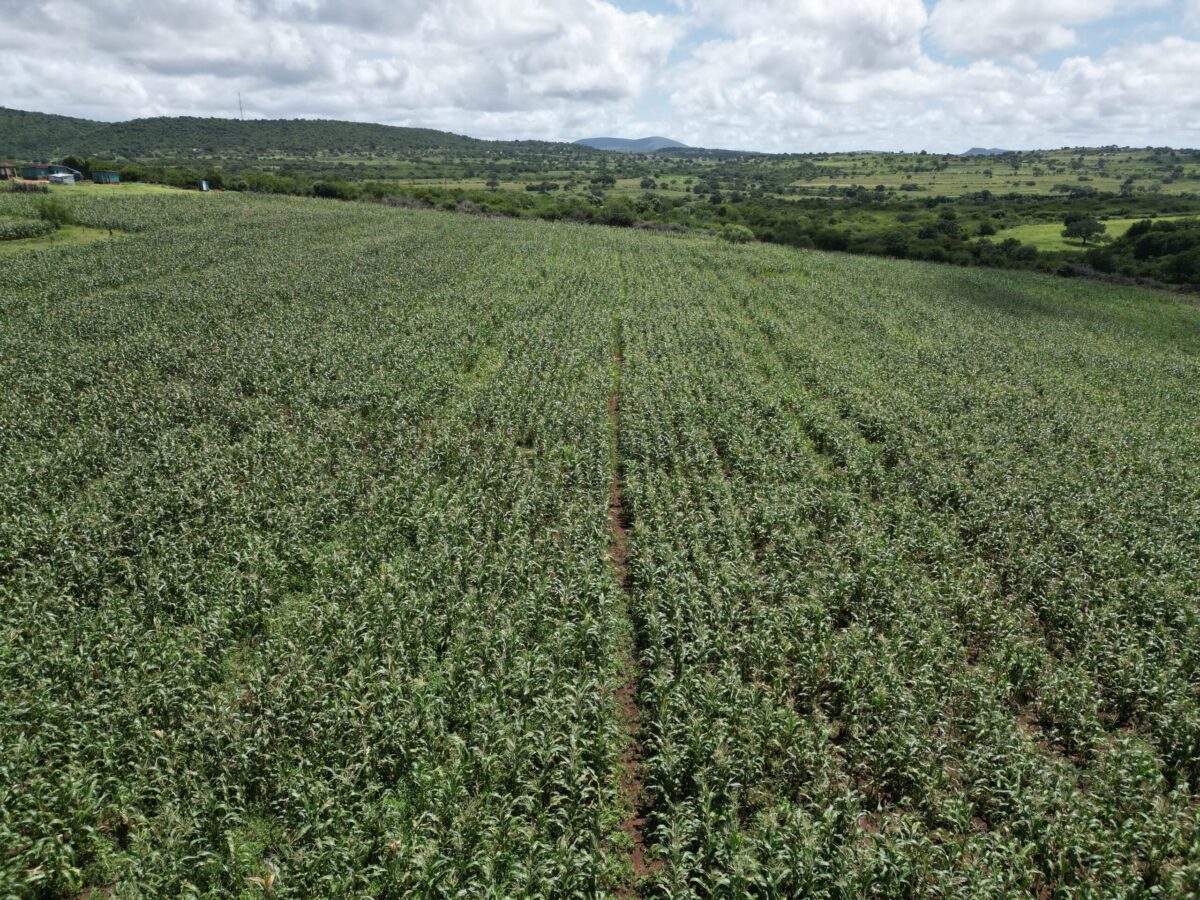
Families relocated to make way for the ongoing construction of the E2.6 billion Mpakeni Dam are witnessing a historic transformation, shifting from subsistence farming to commercial maize production.
This had been made possible by an extensive agricultural support offered by the Eswatini Water and Agricultural Development Enterprise (EWADE), these families are now poised for record-breaking harvests, marking a new era of self-sufficiency and economic empowerment.
Resettled in Thezane, Makhava, Lulakeni, and KaMngayi, these families have been equipped with essential resources to ensure their long-term success as commercial farmers. This initiative underscores EWADE’s unwavering commitment to sustainable development, ensuring that displaced families do not just recover but thrive in their new environment.
With renewed confidence, the farmers are preparing for an exceptional yield, supported by substantial investments from EWADE. The organization dedicated over E6.4 million to land preparation for maize cultivation and provided farm inputs worth more than E0.5 million. The area planted with maize was 60.75 hectares benefiting over 84 households. These essential inputs—including basal fertilizers, seeds, pesticides, top-dressing fertilizers, and tractor services—provided the farmers with the foundation needed for an abundant harvest. This investment surpasses what these families previously had access to, further reinforcing EWADE’s dedication to securing their agricultural prosperity.

EWADE’s Corporate Communications Manager, Nokwazi Hlophe, emphasized that the success of this initiative reflects the organization’s mission to transform lives through sustainable agriculture. “Our agricultural restoration plan goes beyond merely allocating land; it ensures that resettled families are equipped with modern farming inputs and best agricultural practices to secure their future,” Hlophe said. She added that with such extensive support, these families are on track to achieving agricultural independence, contributing to national food security, and reducing Eswatini’s reliance on imports.
One such success story is Solomon Mjikijelwa Ginindza, who was relocated from Mpakeni to Thezane. With a joyful whistle and a song of gratitude, he stood proudly in his flourishing maize fields, his face beaming with excitement. The sight of his thriving crop filled him with immense satisfaction, knowing that this season’s harvest promised a high yield. Overflowing with appreciation, he praised EWADE for its unwavering support, which had transformed him from a small-scale subsistence farmer into a thriving commercial maize producer. “I am very happy with my maize crop—it looks like I will achieve my highest yield ever. I am now preparing to build a large maize crib to properly store my harvest before shelling. We are overjoyed, and our main concern now is obtaining materials to construct the crib. We are confident that we will sell our surplus to the National Maize Corporation (NMC), generating revenue to purchase farm inputs for the next planting season. We are truly thankful to EWADE for the support, which exceeds what we had before the relocation. We also appreciate the livelihood restoration program, as it has transformed our lives like never before.”
Another ecstatic beneficiary, Make Dlamini, praised EWADE for the significant impact on her family’s livelihood. “I am truly appreciative of EWADE’s agricultural restoration plan, which has unexpectedly turned us from subsistence farmers into commercial maize producers. This is the first time I have ever seen such beautiful, fully grown maize, and I am sure it will yield more than ever before. I also thank EWADE for providing us with technical guidance on how to properly nurture maize for a bumper harvest. In my previous farming experience, I had never used both basal and top-dressing fertilizers, but with EWADE’s assistance, I have learned their importance. I am confident that I will have enough maize for consumption and will sell the surplus at the market.”
Elizabeth Dlamini, another beneficiary from Thezane, shared similar sentiments, expressing her delight at the prospect of a plentiful harvest. She acknowledged that while she had been involved in maize farming before her relocation, her yields had always been low due to a lack of fertilizers. “This year, I will be harvesting my highest yield ever. I have learned that applying fertilizers significantly increases crop production, and I am grateful to EWADE for empowering us with this knowledge. I will have enough maize for consumption and will sell the surplus to the market.”
The thriving maize fields caught the attention of National Maize Corporation CEO Mavela Vilane, who traveled from Matsapha to tour the farms. During his visit in January, Vilane was visibly impressed and congratulated the farmers, particularly those from Thezane, for their exceptional work. He assured them that the corporation would purchase their surplus harvest after shelling. Additionally, he encouraged them to continue growing maize and to consider cultivating beans to enhance the country’s food security and reduce reliance on imports.
Chief Gasawangwane expressed his profound appreciation for the remarkable transformation brought about by EWADE’s efforts. “We are truly grateful for the tremendous job done by EWADE in ensuring that these resettled families not only recover but prosper. Seeing their produce at such a commercial scale is a testament to the unwavering commitment of EWADE. These families now have access to better resources and opportunities than ever before, and this transformation will continue to benefit our community and strengthen Eswatini’s food security. Furthermore, EWADE has spearheaded a well-structured resettlement and livelihood restoration program that has truly changed the lives of my people for the better. Their commitment to providing more than what was lost is commendable, and we can confidently say that our subjects are now thriving.”
With each passing season, the impact of EWADE’s efforts becomes increasingly evident. The resettled families, once facing uncertainty, are now thriving as commercial maize producers, contributing to Eswatini’s vision of food sovereignty. This transformation stands as a beacon of hope and resilience, proving that strategic agricultural support can change lives, strengthen economies, and build a sustainable future for generations to come.


